
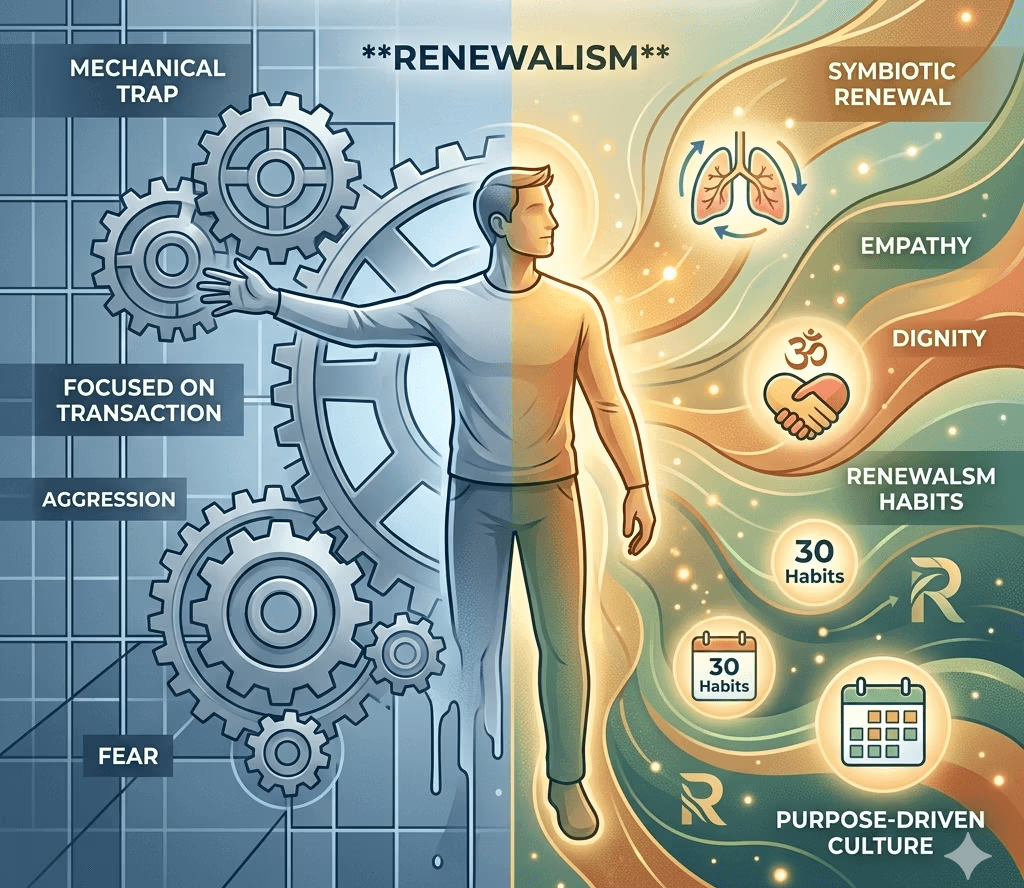
Building a purpose-driven culture is a deliberate act of leadership that transforms how an organization interacts with the world. Christina Harbridge’s leadership at Bridgeport Financial provides a compelling blueprint for this journey. By shifting the focus from transactional metrics to human dignity, she proved that organizations can achieve exceptional results by honoring their “why.”
In the high-stakes world of debt collection, the standard “mechanical living” approach is one of aggression and fear. We are often conditioned to believe that results come from force. However, Christina founded Bridgeport on the premise that the human behavioral problem – the breakdown of empathy – is caused by transactional thinking, which she replaced by relationship thinking.
By shifting the focus from the “what” (collecting money) to the “why” (treating people with dignity), Harbridge didn’t just change a business model; she initiated a complete renewal of industry benchmarks.
The Behavioral Problem: Mechanical Living in Business
Traditional collection agencies operate like machines. They follow a script, ignore the human on the other end, and prioritize a “Cut or Counter” mentality. This is the definition of mechanical living – acting out of rigid social conditioning rather than conscious awareness.
Harbridge recognized that when people are in debt, they are often operating at a “low vibration” of fear and shame. Adding aggression only deepens that state, making them less likely to cooperate.
How RENEWALism Habits Transform Culture
To follow the path Bridgeport Financial blazed, an organization must move from being a “mechanic” to a “sculptor” of human potential. This requires embedding specific RENEWALism habits into the organizational DNA:
- Invoke Gratitude, Independent of Circumstances: Harbridge’s team was trained to find value in every interaction, even the difficult ones. This habit prevents the ego from taking control and ensures that the “vibrational resilience” of the staff remains high. Christina changed the incentive metric from “amount to debt collected” to “amount of ‘thank you for the call’ cards sent”.
- Value Conscience / Business Purpose Over Gains: By incentivizing the quality of the interaction, Bridgeport recognized that the dignity of the defaulter can result in repeat business for Christina’s client. Not only did Bridgeport collect 300% more than the industry average, most of the people and companies they called went back to do more business with the original company that had contracted the collection agency. This is an unprecedented occurrence in the industry.
- Breathe Consciously and Stay in Harmony: Instead of slipping into the “TBHAR-spiral” of negative reactions, a purpose-driven culture encourages staff to breathe consciously and maintain equilibrium. This allows for “diluting and discharging” the stress of the job mindfully into a higher sense of purpose. Bridgeport ensured their people proudly aligned their Say-Do-Be, to stay in balance, both professionally and personally.
The Path Forward for Your Organization
Building a culture based on purpose is not about a single grand gesture; it is about the 30 habits that individuals embrace daily. When your “why” is rooted in higher human consciousness, your “how” naturally shifts toward empathy, and your “what” becomes a vehicle for positive change.
Bridgeport Financial proved that treating people with respect is more effective than treating them like a debt. By adopting the principles of RENEWALism, more organizations can transition from the mechanical matrix to a culture that truly honors the human spirit.